

Loading the essay…
Read the classics, learn to edit, & publish monthly alongside other writers.

Read the classics, learn to edit, & publish monthly alongside other writers.

Read the classics, learn to edit, & publish monthly alongside other writers.

Read the classics, learn to edit, & publish monthly alongside other writers.
Essay Club is a studio for essayists. Eight classics this fall, a deadline every month, and a room of writers who care how sentences work.
Essay Club is a studio for essayists. We read the classics together on Monday nights, publish by the 1st of every month, and edit each other in between.
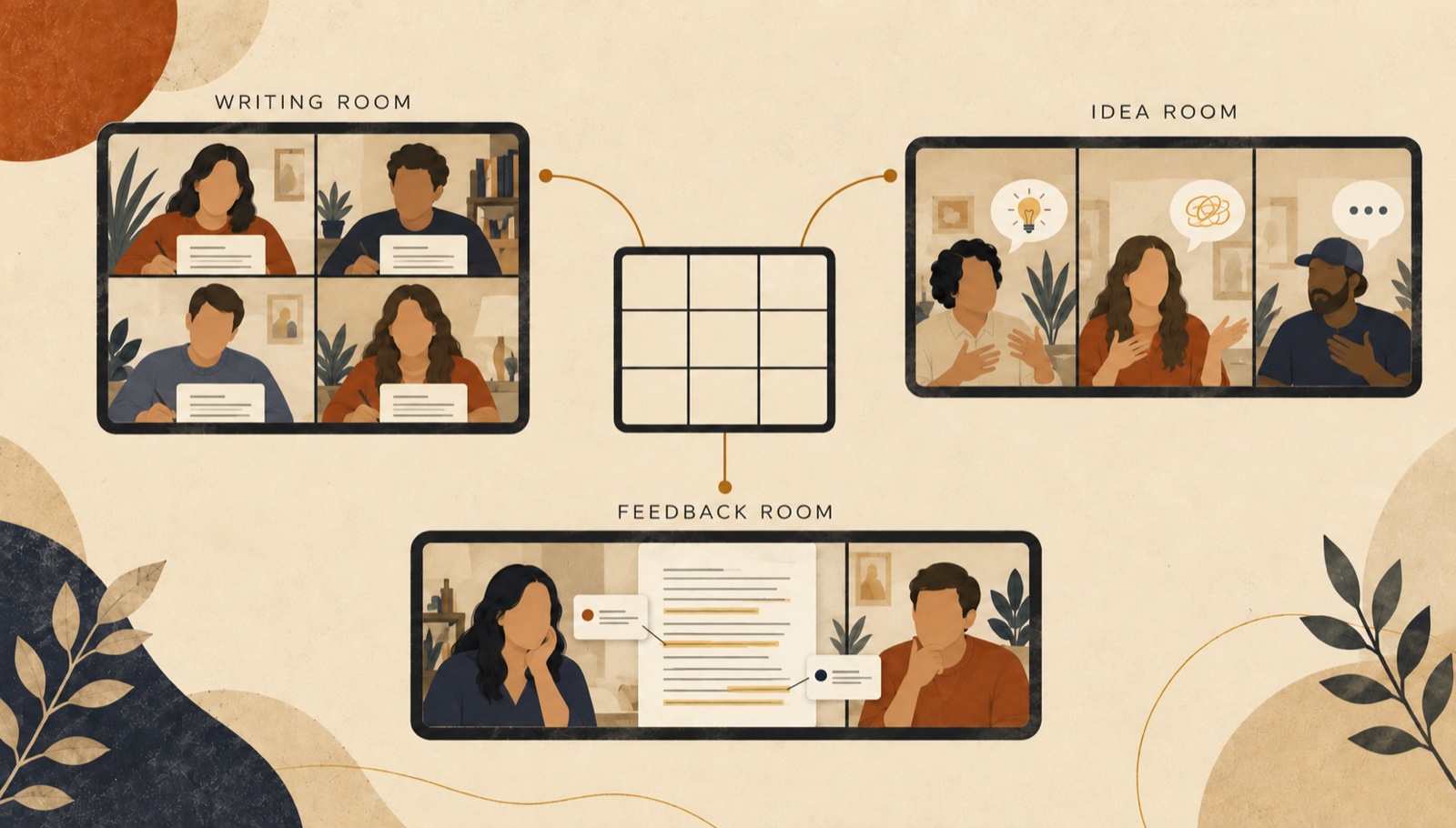
Stop scrolling the news. Show up at 7pm ET and read works that have endured decades and centuries. You get a short seminar on the writer—then we co-read, comment in the margins, and discuss as a group.
Overcome your feedback avoidance. Join Feedback Fridays at 3pm ET every week, exchange drafts in our forum, or use Margin Muse (our software for detailed, pattern-level feedback).
Break the slump. Each month you set your goal and publish by the 1st. It can be a short 500-word essay, or long form with multiple drafts. You decide. We throw parties to read each other's work.
A classic essay every Monday at 7pm ET, together in the margins. Forty a year.
Friday feedback calls, the forum, and Margin Muse reports on your drafts.
By the 1st of every month. Then a publish party. Never publish to crickets.
The structure of reading great essays, the camaraderie and insights of weekly sessions with fellow writers, the monthly accountability of producing essays, and Michael's lively, warm, and intelligent leadership make Essay Club a unique, effective and encouraging group. I'm writing pieces I am very happy with.Stephen Morrison · member
Every week, we read a classic and study the patterns we can bring into our own writing. It's like a book club, except you don't have to read anything in advance. Just show up, read, and comment in the margins. We chat as a group afterwards. Long essays are compressed to their essential 3,000 words so they fit in our 1-hour session. We run these seasonally, and I recommend essay anthologies for the short breaks between them.
Scroll →

A ten-minute talk on the writer: where they were, what the style is doing, which patterns to watch for.
We read the essay together in a shared doc, in silence, writing in the margins as we go.
Breakouts, then the whole group. The essay first, then the composition: what it does and what you could steal.
Keep scrolling to move through the call

A ten-minute talk on the writer: where they were, what the style is doing, which patterns to watch for.
We read the essay together in a shared doc, in silence, writing in the margins as we go.
Breakouts, then the whole group. The essay first, then the composition: what it does and what you could steal.
Neither a lecture nor a book club. A seminar, once a week.
All our readings come with two documents: the slides from our live sessions are formatted as animated lesson plans you can read async; the essay we read—including everyone's comments—is always available (leave your thoughts in the margins).
Scroll →
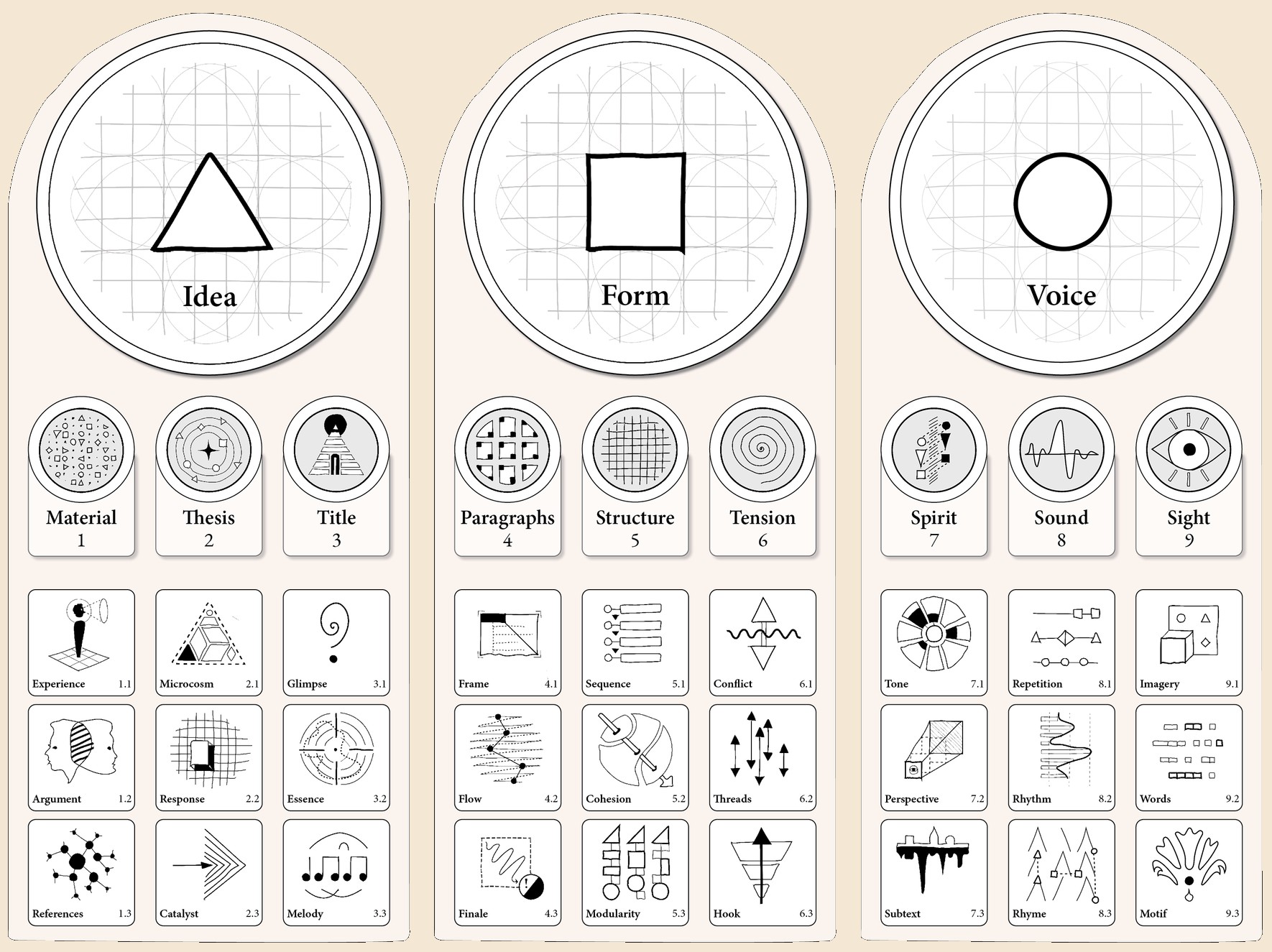
For every classic essay we read, we'll look at color-coded diagrams to make sense of the patterns on the page. Through reading analytically, you'll learn how to bring these into your own work. Everyone in the club gets the textbook for free.
See what's in the textbook →For every classic essay we read, we'll look at color-coded diagrams to make sense of the patterns on the page. Through reading analytically, you'll learn how to bring these into your own work. Everyone in the club gets the textbook for free.
See what's in the textbook →Loading the essay…
To reduce phone use, there are a few tactical things like deleting social media apps, deciding not to scroll during daylight, setting the screen to black and white, or downgrading to a dumb phone. But the reality is that without addressing the deeper, more metaphysical angst that drives this addiction, no tactics will make that much of a difference.
As the cultural conversation is dominated by what is fast and loud and immediately engaging, we lose the capacity to think in paragraphs, to think hard about the same thing for half an hour, to practice any kind of sustained attention.
The faster things go, the more immersed we are in the infinitude of flow, the more we forget to feed the part of ourselves that likes quiet, that can live in quiet. That deprivation makes itself felt in the body as a kind of dread. A full body angst.

Every Friday at 3 pm, we jump on a call to work through our own essays. You can either use the time to write, to talk through ideas, or exchange drafts with another member in a breakout room. This is your chance to refine your ideas, become a better editor, and meet others in the club.

We're developing a writing interface that's built specifically for essayists. You can customize the interface, view tabs in split screen, chat with the best Anthropic models, and use tools built around the Essay Architecture framework. AI never writes for you; it leaves comments in the margins.
Every Friday at 3 pm, we jump on a call to work through our own essays. You can either use the time to write, to talk through ideas, or exchange drafts with another member in a breakout room. This is your chance to refine your ideas, become a better editor, and meet others in the club.
We're developing a writing interface that's built specifically for essayists. You can customize the interface, view tabs in split screen, chat with the best Anthropic models, and use tools built around the Essay Architecture framework. AI never writes for you; it leaves comments in the margins.

Every Friday at 3 pm, we jump on a call to work through our own essays. You can either use the time to write, to talk through ideas, or exchange drafts with another member in a breakout room. This is your chance to refine your ideas, become a better editor, and meet others in the club.

We're developing a writing interface that's built specifically for essayists. You can customize the interface, view tabs in split screen, chat with the best Anthropic models, and use tools built around the Essay Architecture framework. AI never writes for you; it leaves comments in the margins.

Hover any node to trace its lineage. Margin Muse scores your draft on all twenty-seven.
Check in on the 1st with one goal. Publish by the next 1st. Anything with a URL counts. Then the publish party.
3pm ET, every week. Bring a draft, get paired, exchange notes.
7pm ET, every week. A classic essay, read together in the margins. Oct 12 and 19 are open.
Keep scrolling to move through the month
Bring a draft, get paired with another writer, exchange notes in a breakout, talk it through. No feedback grenades.
Members trade drafts and comments between calls. Each request shows your goal, what you're looking for, and your deadline.
Upload a draft and get a report on the 27 patterns: where your thesis is hiding, where the structure sags, where the voice drops.
The forum is where drafts go between Fridays. Post a piece with what you're looking for and your deadline, read what others are working on, trade comments, and see what got published this month. Your goal, your streak, and your essays live here too.
Post a draft with what you're looking for and your deadline. Read what others are working on. Trade comments. See what got published this month. Your goal, your streak, and your essays live here too.
Fall price through Oct 25 · your rate never goes up
Enroll on SubstackOr join one session free to try it out
Refund policy. Try it for a month, and if it isn't for you within 30 days, I'll refund you in full.
| Item | Spec | Bought separately |
|---|---|---|
| 01 Monday readings | 40 live co-readings / yr · 7pm ET · recorded | $1,200 |
| 02 Margin Muse | 3,000 credits · ≈15 full reports · 27 patterns | $360 |
| 03 Textbook | Essay Architecture · 25,000 words · 40 chapters | $120 |
| 04 Friday feedback | Standing call · 3pm ET · breakouts | — |
| 05 The deadline | Publish by the 1st · publish party · streaks | — |
| 06 The forum | Drafts, feedback exchange, member site | — |
| Total | Before items 04–06 | $1,680 |


M. Dean · educated as an architect · essays since 2020
| 01 | Editor-in-Chief, Write of PassageBuilt a team of 15 editors. Thousands of drafts. Redesigned the curriculum. | 2021–2024 |
| 02 | O'Shaughnessy Fellow$100,000 to write Essay Architecture and build the software on top of it. | 2024 |
| 03 | Cosmos Institute Essay PrizeWinner, "Essay Writing as Personal Sovereignty." | 2024 |
| 04 | Essay Architecture Prize$10,000 open essay prize. Eight judges. Winner Tommy Dixon. | 2025 |
| 05 | The Best Internet Essays 2025Edited the finalists into a pocket anthology. | 2026 |
| 06 | A million wordsPublished every month for five years without missing one. | 2020– |

Most members notice the reading first. After a few Mondays you start seeing the architecture in everything: where an essay turns, how a writer earns the ending, why one paragraph moves and the next one doesn't.
Then it shows up in your drafts. You find the thesis faster. You cut with more confidence. You stop asking whether a piece is done and start knowing.
Writing is a long game. Things didn't click for me until year three. The club exists so you don't have to spend those years alone.
Eight classics this fall. A deadline every month. A room of writers who care how sentences work.
Four syllabi a year: summer, fall, winter, spring. Twelve, eight, ten, ten. Fifty-two Mondays, forty essays, and a few weeks off to write.
Wallace, Jamison, Emerson, Sontag, O'Gieblyn, Montaigne, Woolf, Orwell, White, Beard, Didion, Chesterton. Done.
Wallace, Dillard, Montaigne, Seneca, Le Guin, Voltaire, Zadie Smith, Baldwin. Starts Oct 12.
January to March. Syllabus announced in December.
April to June. Forty a year, every year.